Tuesday, September 28, 2010

Top consignments

An award is given out to the top consignment of goats.  Those who consign 3 or more goats are eligible.  The winner of this year's top consignment is Craig Adams (IL).  His top three bucks gained an average of 0.217 lbs. per day. 

When the data is compared for the top consignment of five goats (there is no award), Adams' consignment still has the highest average daily gain at 0.188 lbs. per day.

Noteworthy is the Burke consignment because none of  his goats required deworming, while all having ADG ratios above 100.  All of Wes Pinneo's bucks also had ADG ratios above 100.  All four of John Smith's bucks had ADG ratios above 100.

Congratulations to all of our top consignors!


Click on table to view larger version in another window.

Download buck sale catalog

A catalog of the sale bucks can be downloaded as a PDF file (1.8 mb) at .../GoatTest/2010/buckcatalog.pdf.  The catalog contains images and data from the 11 bucks that qualified for the sale.

Printed copies of the buck catalog and doe listings will be available this Saturday, the day of the silent auction.

Buck catalog
Doe listings

Monday, September 27, 2010

Best of 2010

GOLD buck
Top-performing buck
Highest rate-of-gain (ratio of 198)
Most parasite resilient (tied)
Largest rib eye (tied)
#2 - consigned by Craig Adams (IL)

Most surprising performance (Myotonic)
ADG ratio of 148

#49 - consigned by Kent Ozkum (MD)
Most parasite resistant (lowest avg. FEC)
2nd highest rate-of-gain (tied, ratio of 181)

#4 - Consigned by Craig Adams (IL)
Largest rib eye (tied)
#55 - consigned by Mike Renick (WV)
Most improved (Edward)
#1 - consigned by Craig Adams (IL)
Strongest libido
Largest scrotum (tied)

#18 - consigned by Merritt Burke (DE)
Heaviest buck
Largest rib eye (tied)
Friendliest (Hemingway)
#40 - consigned by Sherrie Losch
Best consignment of five bucks
#'s 50-54 - Wes Pinneo (KS)

Five year consignor
Top-performing buck in 2006 test

Jeanne Dietz-Band (MD)
Five year consignor
Top-performing buck in 2007 test

Don Smith (VA)
Best consignment (top 3 bucks)
#'s 2, 4, and 5 - Craig Adams (IL)

GOLD buck
#51 - consigned by Wes Pinneo (KS)
Most photogenic (Savanna)
ADG ratio of 148

#69 - consigned by Tim & Teresa Swaine
2nd highest rate-of-gain (tied, ratio of 181)
#63  consigned by John Smith (VA)
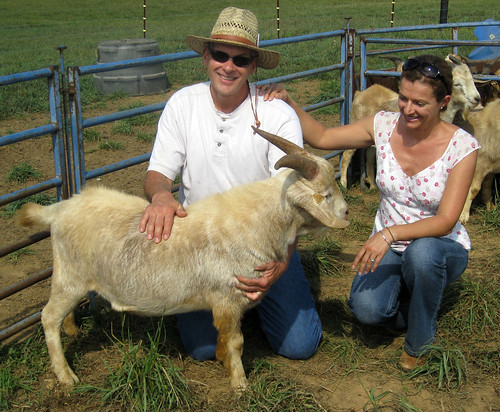
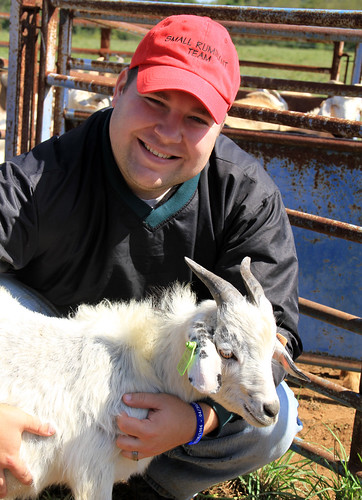
Cutest (Gizmo) - pictured with David Gordon
Avg. FEC:  171 epg
#48  consigned by Kent Ozkum (MD)


Sunday, September 26, 2010

Test summary

Since June 4-5, a considerable amount of data has been collected on each buck. Body weights, FAMACHA©, body condition, coat condition, and dag scores were determined every two weeks.  Individual fecal samples were collected every two weeks.

Pooled fecal samples were collected every four weeks.  On September 9, the bucks were scanned to determine carcass characteristics.  They were evaluated for reproductive soundness and structural correctness.  Data collection was made as consistent as possible.


Body weights and ADG
On June 4-5, the 72 goats that started the test ranged in weight from 31 to 75 lbs. (14.1 to 34.0 kg) and averaged 44.1 lbs. (20 kg). After a 12-day adjustment period in which the goats gained an average of 1.7 lbs (or 0.142 lbs. per day), the goats were reweighed to determine starting weights.

On June 17, starting weights ranged from 32 to 74 lbs. (14.5 to 33.6 kg) and averaged 44.4 lbs. (20.2 kg).  For the 100-day duration of the test, the 67 goats that finished the test gained from -1 to 24 lbs. (-0.5 to 10.9 kg) and averaged 12.1 lbs. (5.5 kg). On September 23, ending weights ranged from 31 to 81 lbs. (14.1 to 36.8 kg) and averaged 58.2 lbs. (26.5 kg)

ADG ranged from -0.01 to 0.24 lbs. (4.5 to 109 g) per day and averaged 0.121 lbs. (55 g) per day.  The goats gained the most weight during the first weight period, from June 17 until July 1, when the forage was the most abundant and temperatures were still below 95ºF. They gained 0.315 lbs. (143.2 g) per day during this period.


The second highest rate of gain was during the sixth weigh period (August 25-September 9) when the goats gained nearly as much at 0.313 lbs. (142.3 g) per day. Much of this was compensatory gain, as the goats were given access to a "fresh" pasture and they began eating some hay.  Previously, they refused to eat supplemental hay.  They never consumed anything from the three protein tubs.

The only weigh period in which the goats lost weight was the 5th period (August 12-25) when the goats lost an average of 0.083 lbs. (37.7 g) per day.  In fact, during the month of August, the goats had practically no forage to eat.  As mentioned in previous blog entries, the goats did incredibly well this year when you consider the extreme drought and record high temperatures.  Other species of livestock would not have fared nearly as well.

Usually, the goats lose weight during the last two week period, due to the rut.  This is especially true with the bigger, more mature and dominant bucks.  Last year, the bucks lost an average of 0.221 lbs. (100.5 g) per day.  This year, (on-average) they maintained their weight. A way to reduce the effect of the rut would be to move the test several weeks early. Start two weeks earlier; end two weeks earlier.


Fecal egg counts
Individual fecal samples were sent via overnight mail to Dr. Dahlia O'Brien's lab at Delaware State University.  Individual fecal egg counts were determined using the Modified McMaster Technique.  A two-chambered McMaster slide reduces the variation in the data.

At the start of the test, all of the goats are dewormed with anthelmintics from two different drug families.  This year, moxidectin (Cydectin®  injectable) was administered (as an injection) at the cattle dose.  Because levamisole was not available, the other anthelmintic administered was albendazole.  The Valbazen®  sheep drench was administered orally at 2x the sheep dose.

The purpose of giving two dewormers at the start of the test (independent of the need for deworming) is to make sure all of the goats start the test equally and (relatively) free from parasite infection.  Unfortunately, this year's double-dosing only reduced egg counts by 28 percent.  In year's past, the initial dewormings (which always included levamisole) reduced egg counts by more than 95 percent.

While some high fecal egg  counts were observed during the test, egg counts were low throughout most of the testing period, averaging less than 500 epg from July 15 until the end of the test.  The pathogenic burden of the barber pole worm is 2,000 epg.  In the test, the (Gold) performance standard for average fecal egg count is < 500 epg.


Most of the high egg counts were likely due to pre-existing worm infections and possible anthelmintic failure. Only one of the top-gaining goats failed to meet the performance standards for parasite resistance (fecal egg counts).

Pooled samples
Pooled samples were sent via overnight mail to Dr. Ray Kaplan's lab at the University of Georgia College of Veterinary Medicine.  With the exception of Nematodirus, all strongyle (roundworm) eggs look the same when observed under a microscope.  As a result, the eggs must be hatched to identify the type of worm (from the larvae).  Fecal coproculture showed the worm burden to be 100 percent barber pole worm (Haemonchus contortus).

The only fecal coproculture that showed a significant amount of other worm species was the sample collected on June 5.  This made sense as the goats arrived from many different farms and states. The June 5 sample was composed of 80% Haemonchus, 15% Trichostrongylus, and 5% Nematodirus.

Coccidia oocysts were frequently observed in the fecal samples (individual and pooled), but this was of no real significance, as the goats were treated for coccidiosis upon arrival and their minerals contained a coccidiostat.  Clinical coccidiosis was not observed in any of the goats.  Higher dag scores were attributed primarily to dietary causes.

Tapeworm eggs were sometimes noted in the fecal samples.  At the beginning of the test, tapeworm segments were seen in some feces.  Except in extreme cases, tapeworms are not considered to be pathogenic in small ruminants. Immunity is developed relative early in life.


FAMACHA© scores
Because the worm load was (almost) all barber pole worm, the FAMACHA© system was especially effective for monitoring and controlling internal parasites in the 2010 test.  Body condition, coat condition, and dag scores were also determined to support the decision-making process.  When fecal egg count data (from two weeks prior) was available, it was also  factored into deworming decisions. 

Goats with FAMACHA© scores of 4 and 5 are always dewormed in the test.  Goats with FAMACHA© scores of 1, 2 or 3 are usually not.  However, this year, because of the possible anthelmintic failure, goats with FAMACHA© scores of 3 were also dewormed during the early part of the test  Once levamisole was obtained for the test, goats with FAMACHA© scores of 3 were no longer dewormed.  The test data showed that levamsiole was clearly the most effective anthelmintic in this year's test, among this year's goats.

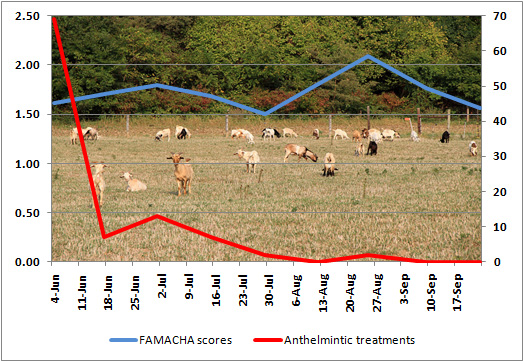
While some few goats struggled with Haemonchus at the beginning of the test, few goats required deworming during the test period.  The twenty treatments that were administered on July 1 and July 15 were mostly cautionary, given to goats with FAMACHA© scores of 3.  Two-thirds of the goats (n=42) did not require deworming during the test.  Only one of the top-gaining goats failed to meet the standards for parasite resilience (FAMACHA© scores and number of anthelmintic treatments).

This year's extreme weather conditions were not conducive to the development of the barber pole worm and similar worm parasites. While high temperatures lead to faster development of worm larvae, without rainfall, such temperatures are inadequate for successful development. On the other hand, the close grazing caused by the extreme drought, could cause some goats to ingest some infective worm larvae.


Carcass evaluation
At least ten goats from the test will be harvested to collect actual carcass data.  The challenge to carcass evaluation is finding buyers for the meat.  According to last year's carcass data, a goat will yield approximately 25 percent of its live weight in boneless, fat-free meat.  Last year, yield ranged from 21.5 to 30.7 percent.  Yield is higher when the carcass is processed for (bone-in) retail cuts.

Purpose
The purpose of the Western Maryland Pasture-Based Performance Test is to evaluate the performance of meat goats consuming a pasture-only diet with natural exposure to internal parasites, primarily the barber pole worm.  Because all of the goats are being raised in the same environment, the differences observed in a central performance test can be attributed mostly to genetic differences.

You cannot compare goats from this year's test to goats in last year's test (or any other year).  Every year of the test is different.  Different environmental conditions occur each year.  The goats are different, as is the dynamic of the herd.  You cannot compare the goats in this test to the goats in another test or on a farm.  The only way to compare goats from one farm to another is to put them in a performance test (like this one) or submit data for EPDs (expected progeny differences) via NSIP/LP.


The data collected in the test should help producers make selection and buying decisions.  That is the purpose of performance testing.  Questions about the data (and test) should be directed to Susan Schoenian at (301) 432-2767 x343 or sschoen@umd.edu or any member of the Goat Test Team. Team members are listed in the right hand column of this blog.
 
Next year
Another test will be conducted in 2011.  During the next several months, consignors (and others) will be solicited for their input regarding next year's test.  The test is open to male goats of any breed, 3 to 5 months of age, weighing between 35 and 70 lbs.
Saturday, September 25, 2010

Thirty does consigned

Thirty (30) does have been consigned to the October 2nd sale.  There are six consignors from five states. 

As with the bucks, the does will be sold via silent auction. The bidding period will be from 10 a.m. to 2 p.m. Whoever has the highest bid at the end of the bidding period gets the doe.  The floor price for does will be $150.  Consignors may set higher floor prices on some does.

The sale catalog may be downloaded from the web.  It includes pictures of some of the does.  The does are Kiko, Boer, and various crosses.

View doe consignments
Download sale catalog


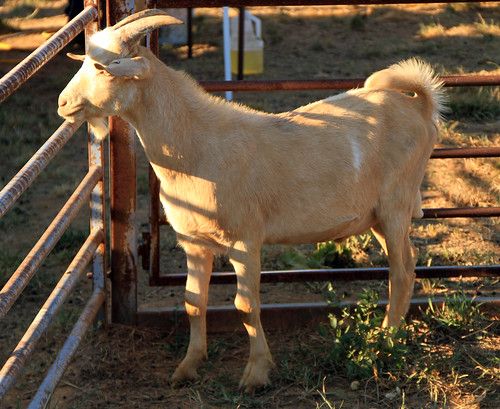
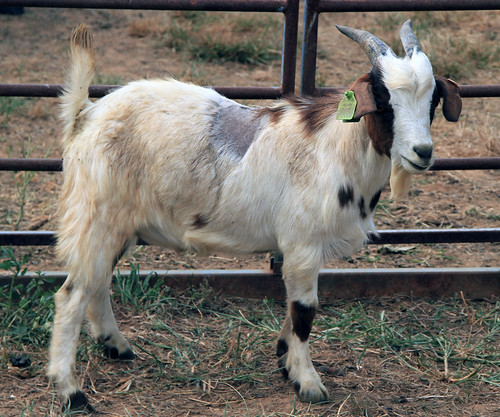
Kiko doe consigned by John Smith (VA)

Private treaty sales

Bucks that did not qualify for the sale may be purchased via private treaty from the consignor.  The minimum sales price is $200.

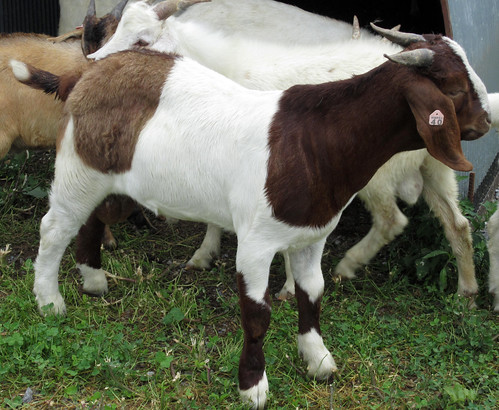
Information and images of the remaining twenty top-gaining bucks have been posted to the web for potential buyers' consideration. The only Boer buck in the test is also included.  His rate-of-gain ratio was 107.

Bucks for sale via private treaty

Friday, September 24, 2010

Sale bucks

Eleven bucks have qualified for the sale on October 2. In order to be eligible for the sale, the bucks had to meet the 2010 Gold, Silver, or Bronze standards of performance for growth, parasite resistance, and resilience and minimum standards for reproductive and structural soundness.


Two of the top-gaining bucks in the test were disqualified from the sale because they failed to meet the minimum standards for either parasite resistance (fecal egg counts) or parasite resistance (FAMACHA© scores).

Of the 11 bucks that are being offered for sale, nine are purebred or percentage Kiko.  The other two include a Kiko x Boer cross and a Myotonic.  Consignors from seven states have bucks in the 2010 sale:  Delaware, Illinois, Kansas, Maryland, Pennsylvania, Tennessee, and Virginia.

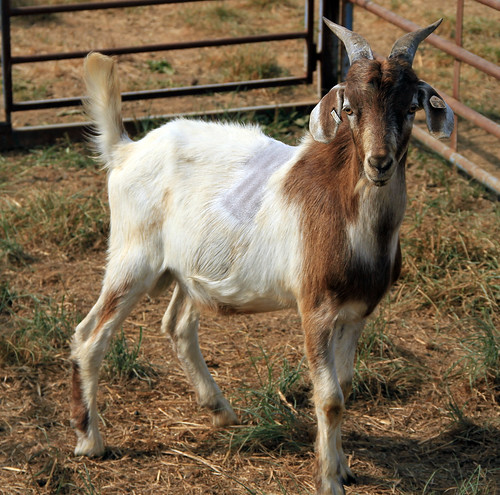
Kiko x Boer buck - #46
consigned by Bill Lowe (PA)
Thirty does have been consigned to the sale.  All of the goats will be sold via silent auction.  The bidding period is from 10 a.m. to 2 p.m.

Sale bucks

Supplemental data

In addition to meeting performance standards for growth, parasite resistance, and parasite resilience, the bucks chosen for the sale must meet minimum standards for reproductive soundness and structural correctness.  On September 9, the goats were evaluated for these criteria.

Scrotal circumference and scrotal splits were measured by Shannon Uzelac. Among the 67 bucks, scrotal circumference (SC) ranged from 11 to 26 centimeters.  Scrotal size varies mostly by the age and size of the buck, though there are also significant differences within a weight group. Scrotal size is also affected by feeding level.  Overfeeding can have detrimental consequences on reproduction in the male.
 

Unlike other livestock species, minimum standards have not been established for the different breeds of goats.  Consequently, the scrotal circumference data is presented for informational purposes only.  However, it is known that testicle weight is related to sperm production.  In other species, scrotal size is also linked to ovulation rate in the female progeny. Scrotal size is a highly heritable trait at 50 percent.

There is disagreement in the goat industry as to whether scrotal splits over 5 centimeters (2 inches) are problematic.  Fourteen bucks had measurable scrotal splits, but none were over 5 cm.  Some central performance tests eliminate bucks with splits over 5 cm, despite the lack of scientific proof.

5 cm (2 in) scrotal split

Shannon counted teats and characterized the teat structure of each buck.  Only four of the 67 bucks in the test have more than two teats.  While there is some disagreement in the meat goat industry, two teats (one on each side) is the preferred teat structure in goats.  Only one buck showed a teat defect (fish teat).  In goats, teat placement is a moderately heritable trait at 30 percent.

Shannon assigned each buck a "hoof" score.  The hoof score (1-5) is indicative of hoof growth and the need for hoof trimming.  As hoof trimming is one of the "worst" jobs on a goat farm, I doubt any goat producer would not favor a goat that has less hoof growth.  Last year, we had to disqualify one of the best performing goats in the test as he had extremely "abnormal" hoof (heel) growth.


Susan Schoenian evaluated the bite of each buck.  A few bucks had "slight" underbites, but none of the bucks had serious jaw defects.  Bucks with serious jaw defects should be culled as this is a heritable trait that would be passed onto many of the buck's offspring.  Goats with severe jaw defects could have difficulty foraging.  Slight deviations in the bite are not a problem.

Jim Pritchard from West Virginia University scanned the goats to determine back fat (BF) thickness and rib eya area (REA). The scans were sent to Iowa State University for processing. As with scrotal circumference, rib eye area varies mostly with the weight of the goat, though there are also significant differences within a weight group.

Rib eye area ranged from 0.5 to 1.3 square inches and averaged 0.91 square inches. In the carcass study, we take actual measurements of the rib eye muscle.  The heritability of rib eye area is 40 to 45 percent.


The goats have so little external fat that the back fat measurements are largely meaningless. In the carcass study, body wall thickness is measured as opposed to 12th rib back fat thickness.  Unlike most other meat animals, goats deposit fat internally around their organs. In the carcass study, we weigh the kidney and heart (KH) fat.

Ultrasound carcass measurements are provided for informational purposes only.  Because it is not yet known how accurate ultrasound scanning is in goats, minimum standards cannot be established.  Nor is it known if rib eye area is the best indicator of carcass muscling (or lean meat yield) in a meat goat.

After the aforementioned measurements were taken, the bucks were carried to a pen to observe their structure and movement.  David Gordon evaluated the bucks for structural correctness.  None of the bucks were deemed to have functional structure problems. 

It is the opinion of this writer that goats should not be expected to have the same structure as other meat animals, as they are far more agile and "athletic."  Only functional structure problems should be considered an issue in commercial meat goat production.

Download supplemental report

Thursday, September 23, 2010

Day 100: the end of the test

6:30 a.m. -- The goats were worked today for a final time by Jeff Semler, Mary Beth Bennett, Jeanne Dietz-Band, and Susan Schoenian.  Jeff Semler weighed the goats and Mary Beth Bennett recorded the weights.  Susan Schoenian determined FAMACHA©, body condition, coat condition, and dag scores.  Pam Thomas recorded the data. 

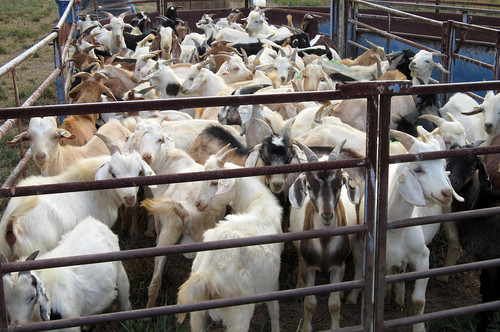
Bucks waiting to be worked.

Goats maintain weight in rut

For the past 14 days, total gain ranged from -3 to + 6 lbs and averaged 0.33 lbs.  Average daily gain (ADG) ranged from -0.214 to 0.429 lbs. per day and averaged 0.024 lbs. per day. 

Merritt Burke (DE) and Randy Allen  (TN) had the top-gaining goats for the period. The low gain for the final weigh period is attributed to the "rut."  The bucks are now quite "active" and odiferous.

For the 100-day duration of the test, the 67 goats gained between -0.010 and 0.240 lbs. per day and averaged 0.121 lbs. per day. Only one goat failed to post positive gain during the test.
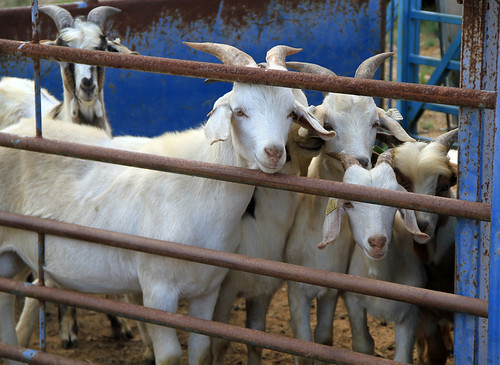
Last year, the goats gained an averaged of 0.138 lbs. per day, but this was with considerably more forage.  The goats did amazingly well this year when you consider the weather conditions and lack of forage.  This is one "tough" bunch of bucks!
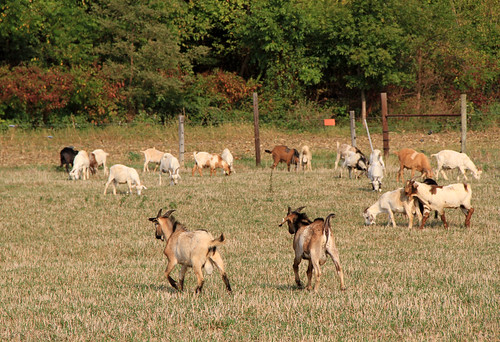
One of the top-gaining bucks for the period.
50% Kiko consigned by Merritt Burke (Delaware)

At the same time, it is important to note that you cannot compare the goats from one year to another.  Nor can you compare the goats in this test to the goats on another farm.  The whole point of a central performance test is to equalize the environment so that the differences that are measured and observed can be attributed to genetic differences, not feed, management, or the environment. 

For the duration of the test, the top-gaining buck remained Craig Adams' #2 Kiko buck.  Two bucks tied for second highest rate-of-gain: Adams' #5 buck and a Kiko buck consigned by John Smith (VA):  #63.  Wes Pinneo's #51 buck has the next highest gain ratio.  Three consigners have bucks that all gained above the test average:  Wes Pinneo, Merritt Burke, and John Smith.

Internal parasites
FAMACHA© scores ranged from 1 to 3 and averaged 1.56, compared to 1.77 two weeks ago. Only one goat had a FAMACHA© score of 3. Obviously, no goats required deworming.

Good FAMACHA© scores.

While the goats experienced some early parasite problems, due to existing pre-existing worm loads and ineffective anthelmintic treatments, the dry weather this year did not allow for a good evaluation (or comparision) of parasite resistance and resilience. The barber pole worm (and its relatives) require warmth and moisture to complete its life cycle.  It is unlikely that the pastures contained high levels of infective worm larvae.

Fecal egg counts
For the fecal samples collected on September 9, fecal egg counts ranged from 0 to 1,825 eggs per gram of feces. Only six goats had fecal egg counts above 1,000 epg.  No goats had fecal egg counts above 2,000 epg, the pathogenic burden of the barber pole worm.  As in year's past, fecal coprocultures showed the worm burden to be almost 100 percent barber pole worm (Haemonchus contortus).

Fall grazing.

Other scores

On the final day of the test, body condition scores ranged from 1.5 to 3 and averaged 2.36, unchanged from two weeks ago.  Coat condition scores (2.07) and dag scores (1.05) were unchanged from two weeks ago. Only one goat showed any signs of scouring.  While a few goats were treated for scours early in the testing period, dag scores tend to be a reflection of the moisture content of the forage.  Dry forage = dry feces.

The goats continue to have access to all of the paddocks, as well as a round bale of grass hay.

Download September 23 (d-100) report

Tuesday, September 21, 2010

Junior Goat Skillathon

Last year, a Junior Goat Skillathon was incorporated into the annual Western Maryland Goat Field Day & Sale.  Twenty-eight youth from Maryland and West Virginia participated in the first-ever event.

Pre-registration is requested for this year's skillathon by this Friday, September 24. To pre-register, contact Susan Schoenian at (301) 432-2767 x343 or sschoen@umd.edu.

The goat skillathon is open to any youth between the ages of 8 and 18.  Youth compete according to their age as of January 1, 2010:  junior, 8-10; intermediate, 11-13; and senior, 14-18.

The goat skillathon will cover all aspects of goat production:  meat, dairy, and fiber.  This year's stations will include breeds, equipment, feed and forage, body parts, judging, "pot luck," and a written test.

A series of online quizzes has been developed to help youth study for livestock skillathon competitions. They can be accessed on the web at .../onlinequizzes.html

Junior Goat Skillathon page

Friday, September 10, 2010

Twenty top-gaining bucks

View pictures of the twenty top-gaining bucks, as of September 9 at ...GoatTest/2010/top20gainers.html.

The goats will be weighed for a final time on September 23, after which time the rankings will likely reshuffle.

In order to be eligible for the sale on October 2, bucks must ALSO meet Gold, Silver, and/or Bronze standards of performance for parasite resistance and resilience AND minimum standards for reproductive soundness and structural correctness.

The current top-gaining buck on test (#2)
Kiko buck consigned by Craig Adams (Illinois)

Bucks which do not make the sale may be sold via private treaty, picked up by their owners, taken to a sale barn, or harvested to collect carcass data.

Twenty top-gaining bucks

Thursday, September 9, 2010

Compensatory gains

6:30 a.m. -- The goats were worked today by Jeff Semler, David Gordon, Mary Beth Bennett, Jeanne Dietz-Band, Shannon Uzelac, and Susan Schoenian.  Pam Thomas recorded the data. 

Best gain of test
Jeff Semler weighed the goats. From August 25 until today, gain ranged from -2 to +12 lbs. and averaged 4.7 lbs.  Average daily gain (ADG) ranged from -0.133 to 0.800 lbs. per day and averaged 0.313 lbs. per day.  The top-gaining goat for the period was an 88 percent Kiko buck consigned by Randy & Lolli Allen (TN).
Randy Allen's 88% Kiko buck gained 12 lbs.

Only three goats failed to gain weight during the past 15 days.  Only two goats lost weight.  No goat lost significant weight.  The few goats that failed to gain weight are among the biggest goats in the test, and likely the most active in rut. 

For the 84 day duration of the test, ADG is ranging from 0 to 0.274 lbs. per day and averaging 0.141 lbs. per day.  The top-gaining buck remains Craig Adams' #2 Kiko buck.  It gained 4 lbs. since the last weighing. After gaining 10 lbs. over the past 15 days, John Smith's #63 Kiko buck moved into second place for rate-of-gain.  It is gaining 0.262 lbs. per day. Last year, Adams and Smith had the two top-performing bucks in the test.

The third fastest gaining buck is another Adams buck, #1. It is gaining 0.238 lbs. per day. Craig Adams and Wes Pinneo both have four bucks in the top ten (for rate-of-gain) and are vying for top consignment.  The other two bucks in the top-ten (for rate-of-gain) are the aforementioned John Smith buck and a crossbred Kiko buck consigned by Mark Sweitzer (PA). The Sweitzer buck is gaining 0.226 lbs. per day.

The goats grazing the re-growth from the pearl millet field.

No anthelmintic treatments

FAMACHA©, body condition, hair coat, and dag scores were determined by Susan Schoenian.  FAMACHA© scores ranged from 1 to 3 and averaged 1.77.  No goat required deworming.   Body condition scores ranged from 1.5 to 3 and averaged 2.3.  Coat condition scores remained virtually unchanged at 2.01.  No goats showed any active or recent evidence of scouring, as dag scores approached 1.0.

August 25 FECs
For the fecal samples collected on August 25, fecal egg counts (FECs) ranged from 0 to 3,350 eggs per gram (epg) and averaged 385 epg.  Only 8 goats had FECs above 1,000 epg.  Only two goats had FECs above 2,000 epg, the pathogenic burden of the barber pole worm.  Fecal egg counts have been low since mid-July, averaging less than 500 epg (low for the barber pole worm).


Another bale of hay for the goats.

The pooled fecal sample collected on August 25 had a fecal egg count of 1,650 epg.  The eggs (larvae) were 99.5 percent Haemonchus and 0.5 percent Trichostrongylus.

A strong finish?
Hopefully, the goats will continue to gain weight, as they finish the last two weeks of the test.  They have the entire pasture system open for grazing.  The 2-acre paddock of pearl millet has been re-opened to allow the goats to graze the re-growth.   The wooded pasture should have enough forage to keep the goats busy for the next two weeks.  The hay feeder will be kept full.  A new bale was put in today.  There is potential rain in the forecast for Sunday.  Temperatures are milder.

Download September 9 (day 84) report

Wednesday, September 8, 2010

How do your bucks rank?

The August 25 (d-70) report has been updated to show where individual bucks rank in terms of average daily gain (ADG).  As of day-70, ADG is ranging from -0.058 to 0.275 lbs. per day and averaging 0.082 lbs. per day for the 67 bucks in the test.  In last year's test (at 100 days), ADG averaged 0.138 lbs. per day, as the bucks lost an average of 3.5 lbs. during the rut (last two weeks of the test). 

Kiko bucks grazing in the new woodland pasture.

The first column of the new report shows the buck's ranking for ADG.  The ranking does not consider any other performance trait or characteristic.   The goal is to sell the top 10 to 15 bucks in the test.  Last year, 11 bucks qualified for the sale.  A few more bucks were sold via private treaty.

In order to make the sale, bucks must meet Gold, Silver, or Bronze standards of performance for growth (ADG), parasite resistance (FECs), and parasite resilience (FAMACHA© scores and number of anthelmintic treatments) AND minimum standards for reproductive soundness and structural correctness.

The only Full Blood Boer in the test is doing well.
Consigned by Sherrie Losch (Pennsylvania)

Tomorrow, the bucks with be scanned to determine rib eye area and back fat.  Ultrasound carcass measurements will be provided for informational purposes only and will not be used to select bucks for the sale. This is because the accuracy of ultrasound scanning (in goats) is not known.  Nor is it known if rib eye area is the best indicator of overall carcass muscling (in goats). 

August 25 (d-70) report updated with ADG rank

Friday, September 3, 2010

Improved conditions

For the past month or so, most of the goats have had insufficient dry matter intake to achieve meaningful weight gains.  The conditions are improving.

Grazing amongst the walnut trees.

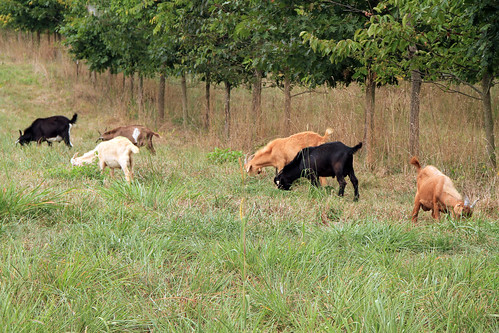
Woodland grazing
Today, the goats were given access to a wooded pasture with fresh forage.  Half of the pasture is planted in walnut trees; the other half is planted in mixed hardwoods.  The pasture contains mostly cool season grasses, with some appetizing weeds mixed in.  This pasture is a supplement to the ten acres that are typically used for the goat test.  Fencing renovations were done to make the pasture available to the goats.

Grazing in wooded pasture (mixed hardwoods).

Eating hay
While the goats did not eat much of the first bale of hay they were given (in mid-July), they have practically depleted the second bale that was put out a few days ago. Another bale will be delivered tomorrow. The first bale had become moldy. 

The test site hasn't received enough rainfall to make the grass grow, but apparently it was enough moisture to cause the hay bale to get moldy and unpalatable to the goats. We will continue to feed hay as the goats consume it. The three protein tubs remain untouched.


Eating hay.

Larval culture
The pooled fecal sample collected on July 29 had a fecal egg count of 800 epg.  The worm eggs (Strongyle type) contained in the sample were 100 percent Haemonchus contortus (barber pole worm).  The pooled fecal sample collected on August 25 had a fecal egg count of 1650 epg.  Some coccidia and tapeworm eggs were observed in the sample. The results of the larval culture are pending.

The pooled samples have a significantly higher egg count that the average of the individual samples.  This is because we collect feces from goats that are more likely to have high egg counts (poorer FAMACHA© scores and softer poop).  We do this because if there are not enough worm eggs in the pooled sample, they will not be able to do the larvae culture.  In a "normal" year, we take random samples from every 3rd goat.

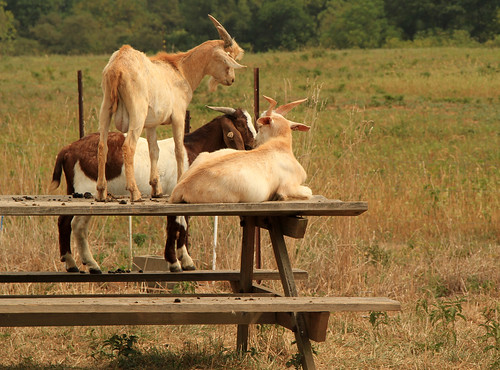
They love their picnic table!

The pooled samples are analyzed by Dr. Ray Kaplan's lab at the University of Georgia College of Veterinary Medicine.  The final pooled sample will be collected on September 23.

Top consignments

The following table shows the top four consignments, as of day 70 (August 25).  The top consignments are determined by averaging the performance of the top three goats in a consignment.

Click on the table to view a larger, clearer version of the table in a new window.

Thursday, September 2, 2010

Top-gaining bucks

The following table shows the twelve top-gaining bucks, as of day 70 (August 25). Click on the table to view a larger, clearer version of the table in a new window.

Hottest and driest year

This is the 5th year of the Western Maryland Pasture-Based Meat Goat Performance Test.  It is also the hottest and driest year.

During the first four years of the test (2006-09), rainfall for June, July, and August ranged from 10.02 to 14.34 inches.  It averaged 12.05 inches.  This year's total rainfall for June, July, and August is just 4.01 inches. Combined with the record high temperatures experienced at the research center, this has been a very challenging year for the goats on test.

Click on image to view a larger version in a new window


It goes without saying that the hot, dry weather has resulted in poor quality forage conditions throughout most of the testing period and that this has not allowed the goats to express their genetic potential for maximum growth. On the other hand, goats are not likely to be profitable if they are pushed for maximum gain.  In fact, goats are the livestock probably best-adapted to the type of weather we have experienced this year.

Hardy bucks
Any goat (or livestock) can do well when the feed supply is plentiful and they are regularly dewormed. The heat and drought have been major "stressors" in this year's test and most of the goats have risen to the challenge.  Most have proven themselves to be quite hardy and adaptable. This is the year, I'd want to buy a buck.

While we wish the goats would supplement their poor forage diet with the protein tubs and grass hay that is available to them, it is quite impressive how they are managing on the all-but-depleted pastures.  They have never gotten anything from the two acres of chicory.  It was mowed prior to the start of the test and did not receive enough moisture to recover.  Thus, the 67-72 goats have been maintained on just 8 acres of pasture since June 5.

The two-acre paddock of pearl millet has been grazed down, but some forage re-growth is occurring. The goats were given a fresh bale of hay, as the first bale got moldy.  There are a few acres of woodland pasture behind the test area that we may be able to put the goats in for some extra nutrition.

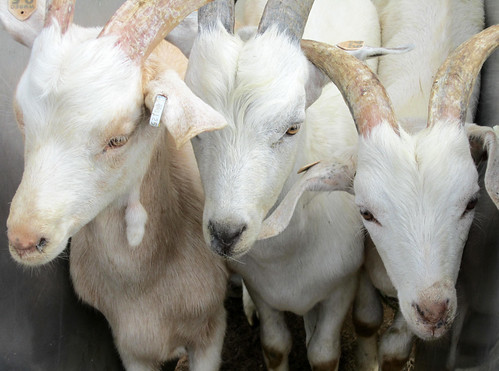
Three Kiko bucks standing in the chute.

Scanning
Next week, the goats will be scanned to determine back fat and rib eye area.  Jim Pritchard from West Virginia State University will do the scanning.  In addition to collecting the usual data, the goats will be evaluated for reproductive and structural soundness.  We will measure scrotal size and splits. We will count and characterize teat structure.  We will measure overbites/underbites. The goats will be visually appraised for structural correctness.  A goat will only be disqualified from the sale if it is determined to have a "functional"  problem.

Sale bucks
After the data collection on September 9, we should have a good idea as to which goats will likely be in the sale.  The selection standards for the sale will differ from last year, especially for growth, as this year's environmental conditions have resulted in different levels of performance and parasite challenge. Final selections for the sale will be made after data collection on September 23.  Pictures and data of the sale bucks will be posted to the web.  Per requests, pictures can be taken for private treaty sales.

Doe consignments
Nominations for the doe sale are requested by September 10.  Having does in the sale broadens the appeal of the buck sale, especially if doe consignments include does of different ages (kids and yearlings) and different breeds and crosses.  Consignors may nominate three does for each buck they have in the test. There is a consignment form for does on this blog.  The form can be filled out online for printing, scanning, or faxing.

Doe consignment form