Monday, September 9, 2019
Buck Test Ended After the 2016 Test
The Western Maryland Pasture-Based Meat Goat Performance Test ended after the test in 2016. Several other states are conducting meat goat performance tests. Producers interested in obtaining performance data on their animals are encouraged to enroll in NSIP (http://nsip.org/). NSIP provides EBVs (Estimated breeding values) for sheep and meat goats in the US.


Thursday, September 14, 2017
Top Bucks Fail to Generate Interest
Three of last year's top-performing bucks were offered for sale at the recent Bluegrass Performance Invitational (BPI) in Frankfort, Kentucky. One buck sold for $500. The other two failed to meet their minimum bids.
Last year, only five bucks met the performance requirements of the test. An additional six bucks were identified as top performers. Last year's test conditions were incredibly difficult. Fecal egg counts were very high and a DrenchRite® test confirmed moderate to high levels of resistance to all anthelmintics. So, having a buck in the top-10 was quite an accomplishment.
The three top-performing bucks that were offered for sale at the BPI sale included two of the top five. They were bucks consigned by David Peters (North Carolina) and Thomas Davis (Missouri). The Peters buck (661) was the most parasite resistant buck in the test. It had an average fecal egg count of 364 epg and a high egg county of 964 epg. It was the second year in a row that a Peters buck accomplished this feat.
Thomas Davis had the other top-5 buck (616). It was the 4th most resistant buck in the test. The Davis buck had an average fecal egg count of 784 epg and a high egg count of 1525. It was Davis's first year to consign bucks to the Maryland test.
The third buck to be offered for sale at the BPI sale was consigned by Angie Loos (Illinois). It (639) was one of the nicest-looking bucks to come out of the Maryland test in many years. It ranked second in average daily gain. It was the only buck to be graded USDA Selection 1. The Loos buck was also the third most resilient buck in the test (it tied with two other bucks), having an average FAMACHA© score of 1.17. Only one time did it have a FAMACHA© score of other than 1.
The top-performing bucks in the Western Maryland Pasture-Based Meat Goat Performance test, last year and in year's past, should be valued for their performance and genetic merit.
Last year, only five bucks met the performance requirements of the test. An additional six bucks were identified as top performers. Last year's test conditions were incredibly difficult. Fecal egg counts were very high and a DrenchRite® test confirmed moderate to high levels of resistance to all anthelmintics. So, having a buck in the top-10 was quite an accomplishment.
 |
| Peters buck being auctioned off |
The three top-performing bucks that were offered for sale at the BPI sale included two of the top five. They were bucks consigned by David Peters (North Carolina) and Thomas Davis (Missouri). The Peters buck (661) was the most parasite resistant buck in the test. It had an average fecal egg count of 364 epg and a high egg county of 964 epg. It was the second year in a row that a Peters buck accomplished this feat.
Thomas Davis had the other top-5 buck (616). It was the 4th most resistant buck in the test. The Davis buck had an average fecal egg count of 784 epg and a high egg count of 1525. It was Davis's first year to consign bucks to the Maryland test.
The third buck to be offered for sale at the BPI sale was consigned by Angie Loos (Illinois). It (639) was one of the nicest-looking bucks to come out of the Maryland test in many years. It ranked second in average daily gain. It was the only buck to be graded USDA Selection 1. The Loos buck was also the third most resilient buck in the test (it tied with two other bucks), having an average FAMACHA© score of 1.17. Only one time did it have a FAMACHA© score of other than 1.
The top-performing bucks in the Western Maryland Pasture-Based Meat Goat Performance test, last year and in year's past, should be valued for their performance and genetic merit.
Wednesday, September 6, 2017
Enter Herd Data in Livestocked
Livestocked is an app for keeping livestock records. It enables you to manage data for different herds and species. It is available for Apple, Android, Windows, and the web. Because data is stored in the cloud, you can synchronize data across devices.
James Cullis from Livestocked gave a presentation at the recent Bluegrass Performance Invitational (BPI) in Frankfort, Kentucky. He encouraged producers to enter their goat herd data into the app. Livestocked is free to download and use. To access more advanced features, there is a cost of $49 per farm per year.

James is working with the NKR (National Kiko Registry) to calculate EBVs for Kikos. His goal is to provide EBVs for other goat and sheep breeds.
EBV stands for Estimated Breeding Value. An EBV is an animal's value as a parent; its ability to transmit its genetics onto the next generation. If herds have shared genetics, EBVs can be calculated across-herd, allowing breed improvement.
The goal of livestock selection is to improve the accuracy of selection. Selecting an animal based on what it looks like is the most inaccurate form of selection. EBVs are more accurate than the data from buck tests and on-farm testing because they factor in the performance of relatives, the heritability of the trait, and data from linked traits, as well as the data from the individual animal.
It is not possible to make herd or breed improvement without data. Putting data into centralized databases allows calculation of across-herd breeding values, adjustment factors, and other useful metrics for the meat goat industry.
Download Livestocked today!
James Cullis from Livestocked gave a presentation at the recent Bluegrass Performance Invitational (BPI) in Frankfort, Kentucky. He encouraged producers to enter their goat herd data into the app. Livestocked is free to download and use. To access more advanced features, there is a cost of $49 per farm per year.

James is working with the NKR (National Kiko Registry) to calculate EBVs for Kikos. His goal is to provide EBVs for other goat and sheep breeds.
EBV stands for Estimated Breeding Value. An EBV is an animal's value as a parent; its ability to transmit its genetics onto the next generation. If herds have shared genetics, EBVs can be calculated across-herd, allowing breed improvement.
The goal of livestock selection is to improve the accuracy of selection. Selecting an animal based on what it looks like is the most inaccurate form of selection. EBVs are more accurate than the data from buck tests and on-farm testing because they factor in the performance of relatives, the heritability of the trait, and data from linked traits, as well as the data from the individual animal.
It is not possible to make herd or breed improvement without data. Putting data into centralized databases allows calculation of across-herd breeding values, adjustment factors, and other useful metrics for the meat goat industry.
Download Livestocked today!
Wednesday, August 16, 2017
A New Era in Western Maryland
The Western Maryland Pasture-Based Meat Goat Performance Test was initiated at the University of Maryland’s Western Maryland Research & Education in Keedysville (Washington County) in 2006.
The purpose of the test was to evaluate the post-weaning performance of meat goat bucklings consuming a pasture-based diet, with natural exposure to internal parasites. Identifying bucks that were resistant and resilient to internal parasites was the trademark of the test.
The test was conducted for eleven years. Almost 800 bucks were evaluated. While the test was open to any breed or cross of goat, it gradually evolved into a “Kiko test.”Over the span of the test, more than 100 producers from 20 states consigned bucks. Top-performing bucks were sold (as far away as California) or returned to farms for breeding.
Over the years, many programs and activities were held in conjunction with the test, including field days, tours, sales, skillathons, and carcass evaluation. In 2014, the BluegrassPerformance Invitational in Frankfort, Kentucky, was established as a place to sell performance tested goats, including the top-performing bucks from the Maryland test. This year's sale is September 1-2, 2017.
Now, the goat test era is over (in Maryland). Goat producers will be encouraged and assisted in their move to the next step in performance testing: within and across-herd EBVs. EBV stands for estimated breeding value and is a measure of genetic merit, The data is far more accurate (repeatable) than the data from buck tests.
A sheep research program will be initiated at the Western Maryland Research & Education next spring (2018). The pastures are being re-established and new infrastructure is being put in, as the hoop house that was installed several years ago was completely destroyed this past winter.
Internal parasites (GI worms) will likely continue to be the focus of the research program, as it is a logical follow-up to the goat test and parasites remain a major obstacle to profitable small ruminant production. We also plan to plant different forages for grazing.
I’d like to express appreciation to my “Goat Team”: Jeff Semler, David Gordon, Pam Thomas, and Mary Beth Bennett. Others who played key roles include E. Nelson Escobar, Niki Whitley, Willie Lantz, Chris Anderson, Jeanne Deitz-Band, Lexie Simmons, and Amy Garza.
Dr. Dahlia O’Brien at Virginia State University (previously at Delaware State University) was instrumental to the success of the test, as she performed all the fecal egg analyses.
Thanks to the Maryland Grain Producers Utilization Board for providing funding for the pen vs. pasture studies.
Thanks to everyone who supported the goat test over the years, including all the consigners and buyers of bucks.
Susan Schoenian
Sheep & Goat Specialist
University of Maryland Extension
The purpose of the test was to evaluate the post-weaning performance of meat goat bucklings consuming a pasture-based diet, with natural exposure to internal parasites. Identifying bucks that were resistant and resilient to internal parasites was the trademark of the test.
The test was conducted for eleven years. Almost 800 bucks were evaluated. While the test was open to any breed or cross of goat, it gradually evolved into a “Kiko test.”Over the span of the test, more than 100 producers from 20 states consigned bucks. Top-performing bucks were sold (as far away as California) or returned to farms for breeding.
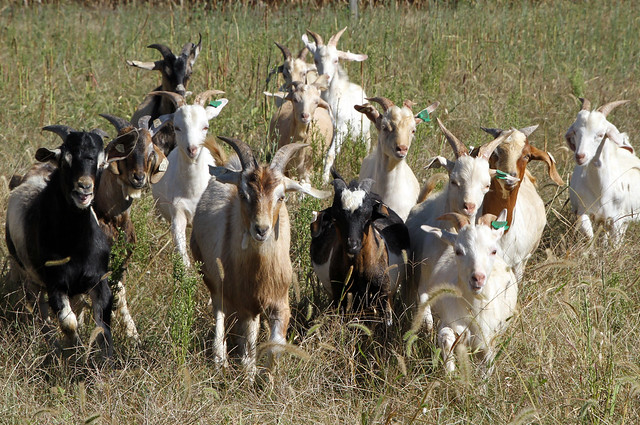 |
| Some of the bucks from the 2015 test |
Over the years, many programs and activities were held in conjunction with the test, including field days, tours, sales, skillathons, and carcass evaluation. In 2014, the BluegrassPerformance Invitational in Frankfort, Kentucky, was established as a place to sell performance tested goats, including the top-performing bucks from the Maryland test. This year's sale is September 1-2, 2017.
Now, the goat test era is over (in Maryland). Goat producers will be encouraged and assisted in their move to the next step in performance testing: within and across-herd EBVs. EBV stands for estimated breeding value and is a measure of genetic merit, The data is far more accurate (repeatable) than the data from buck tests.
A sheep research program will be initiated at the Western Maryland Research & Education next spring (2018). The pastures are being re-established and new infrastructure is being put in, as the hoop house that was installed several years ago was completely destroyed this past winter.
Internal parasites (GI worms) will likely continue to be the focus of the research program, as it is a logical follow-up to the goat test and parasites remain a major obstacle to profitable small ruminant production. We also plan to plant different forages for grazing.
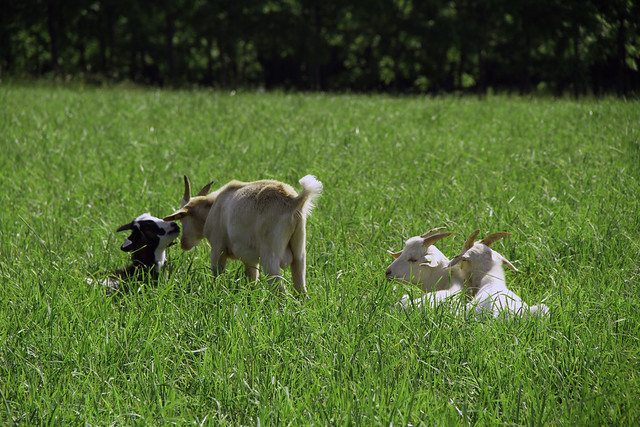 |
| A few bucks from the 2012 test |
I’d like to express appreciation to my “Goat Team”: Jeff Semler, David Gordon, Pam Thomas, and Mary Beth Bennett. Others who played key roles include E. Nelson Escobar, Niki Whitley, Willie Lantz, Chris Anderson, Jeanne Deitz-Band, Lexie Simmons, and Amy Garza.
Dr. Dahlia O’Brien at Virginia State University (previously at Delaware State University) was instrumental to the success of the test, as she performed all the fecal egg analyses.
Thanks to the Maryland Grain Producers Utilization Board for providing funding for the pen vs. pasture studies.
Thanks to everyone who supported the goat test over the years, including all the consigners and buyers of bucks.
Susan Schoenian
Sheep & Goat Specialist
University of Maryland Extension
Tuesday, August 1, 2017
Share Your Opinion
The USDA National Animal Health Monitoring System (NAHMS) is conducting needs-assessment surveys for its upcoming Goat 2019 study of the goat industry. To help NAHMS craft the most informative study possible and obtain data that will be most beneficial to the goat industry. The survey should take 10 minutes or less to complete.
NAHMS Goat 2019 Needs Assessment: https://www.surveymonkey.com/r/NAHMSGoat2019
The survey asks what you consider to be the most important health issues facing the U.S. goat industry. It also asks you to help identify the information that is needed regarding health-management practices used in the U.S. goat industry sectors. The survey will be available through September 8, 2017.
The goat study will initiate data collection in 2019. This will be the second NAHMS study of the goat industry. The data from the study will be reported only in summary form; individual responses will be confidential. Results from the preliminary survey linked above will help determine the priorities and objectives for the goat study.
Additional information about NAHMS, including reports from prior goat studies, is available at http://www.aphis.usda.gov/nahms.
NAHMS Goat 2019 Needs Assessment: https://www.surveymonkey.com/r/NAHMSGoat2019
The survey asks what you consider to be the most important health issues facing the U.S. goat industry. It also asks you to help identify the information that is needed regarding health-management practices used in the U.S. goat industry sectors. The survey will be available through September 8, 2017.
The goat study will initiate data collection in 2019. This will be the second NAHMS study of the goat industry. The data from the study will be reported only in summary form; individual responses will be confidential. Results from the preliminary survey linked above will help determine the priorities and objectives for the goat study.
Additional information about NAHMS, including reports from prior goat studies, is available at http://www.aphis.usda.gov/nahms.
Monday, July 31, 2017

Tuesday, July 25, 2017

Subscribe to:
Posts (Atom)


