
Two bucks met the GOLD standards. The top buck of the 2009 test is a purebred Kiko consigned by Craig Adams from Litchfield, Illinois. Adams is a first-time consigner to the test. Four out of five of the bucks he consigned qualified for the sale. His other buck had the largest rib eye, as determined by ultrasound.
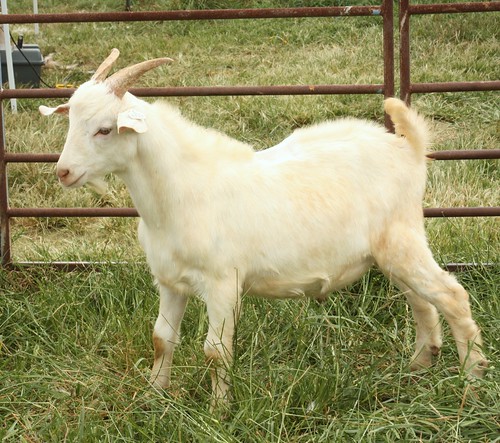 The other buck that met the GOLD standards is a purebred Kiko (a quad) consigned by John Smith from Petersburg, Virginia. Smith has consigned goats to the test every year since the test began in 2006. Three of the five goats Smith consigned qualified for the sale, including a son of last year's top performing buck. Only 0.01 lbs. per day separated the top two bucks in the test.
Four bucks met the SILVER standards of performance. These include two purebred Kiko bucks consigned by John Smith, another buck consigned by Craig Adams, and a 75% Kiko x 25% Boer buck consigned by Kendall and Dana Barnes from Winchester, Kentucky. The Barnes's buck had a FAMACHA© score of 1.0 each time he was checked. His average FAMACHA© score of 1.0 is obviously tops in the test. The Barneses were the top consigner in last year's test.
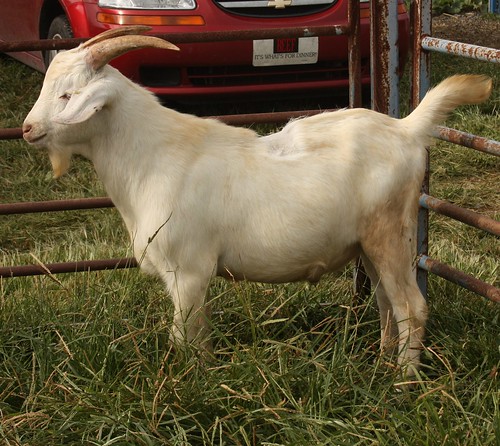 Five bucks met the BRONZE standards of performance. These include two purebred Kikos consigned by Craig Adams and a purebred Kiko consigned by Sky and Debora Shivers from Prague, Oklahoma. Also qualifying was a commercial Kiko consigned by Merritt Burke from Nassau, Delaware, and a 75% Kiko x 25% Boer consigned by Jeanne Dietz-Band from Keedysville, Maryland.
Competition for the top consignment (best 3 bucks) is tight between Craig Adams and John Smith. Jeanne Dietz-Band has the top-performing Maryland buck.
Though only one of his bucks qualified for the sale, four out of five of Merritt Burke's bucks performed well in the test. One of Burke's bucks was the top gaining buck in the test. Another has the distinction of being the most sexually-aggressive buck in the test. His antics over the final 16 days of the test caused him to lose 10 pounds and drop out of consideration for the sale.
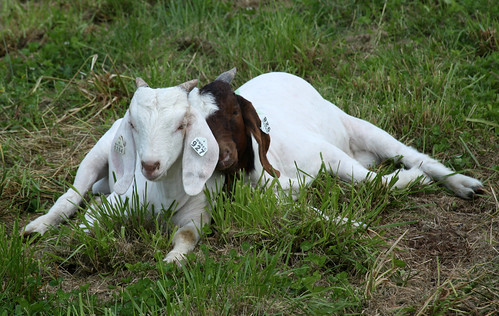 Though no Boer bucks qualified for the sale, five out of six of the Boer bucks in the test had fecal egg counts that averaged less than 500 epg (the gold standard). A Percentage Boer buck consigned by Aaron and Levi Lantz from Oakland, Maryland, had the lowest average fecal egg count in the test: 58 epg. Its highest egg count was only 250 epg. Sherrie Losch's Boer buck (a committee "favorite") had an average fecal egg count of only 156 epg.
Other bucks with extremely low egg counts were Kikos consigned by Warren and Liz Barnes from Missouri and Dick and Sally Rutherford from Illinois.
View pictures and data from the top 11 bucks


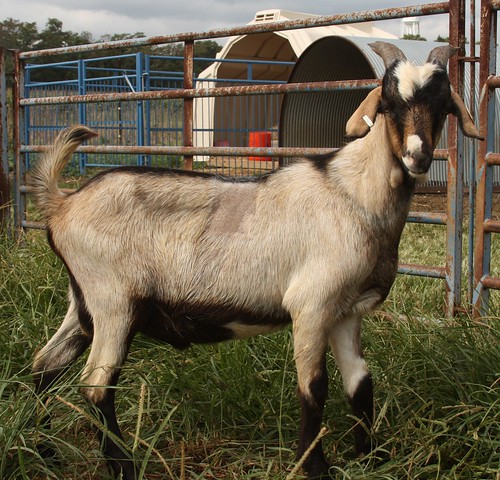
 Scrotal circumference is a highly heritable trait (50%). Unfortunately, the goat industry has not established standards for scrotal circumference. As a result, no bucks were disqualified for having small scrotums. The goat with the largest scrotal size (27.5 cm) was a 68-lb. Kiko buck consigned by Wes Pinneo (KS).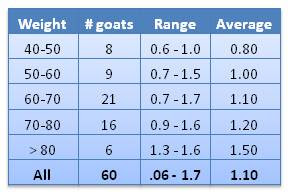
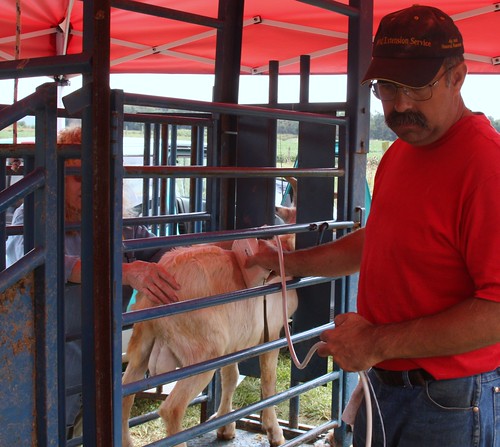
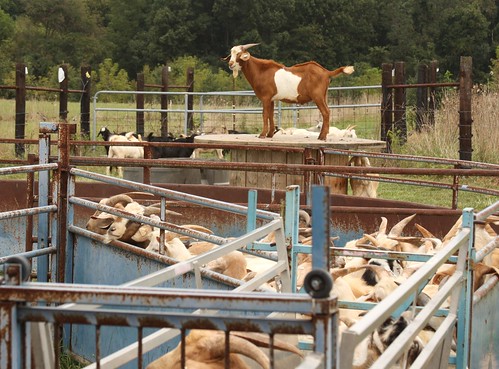 In addition to the normal data collection, the goats were scanned by Jim Pritchard from West Virginia University to determine back fat thickness and rib eye area. The image scans are being analysed by the Central Ultrasound Processing (CUP) Lab at Iowa State University.
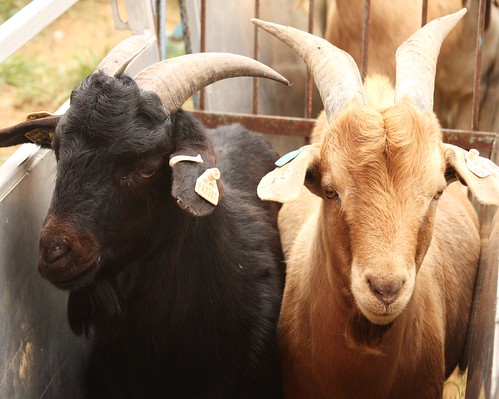 The goats were weighed by Jeff Semler and David Gordon. For the previous 15-day period, weight gain ranged from 1 to 7 lbs. (0.45 to 3.2 kg) and averaged 3.5 lbs. (1.5 kg) or 0.234 lbs. (106 g) per day. No goats lost weight during the past 15 days.
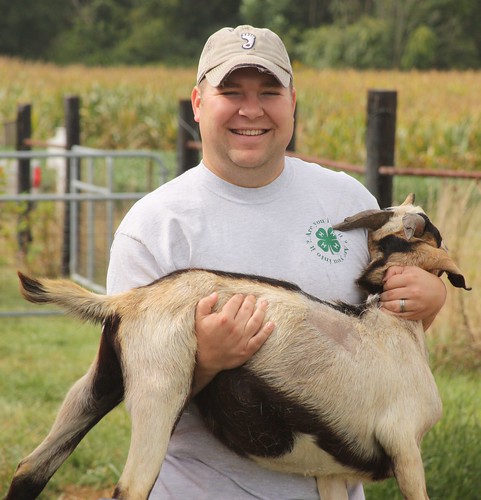 For the first 84 days of the test, weight gain has ranged from 1 to 35 lbs. (0.45 to 15.9 kg) and is averaging 17.3 lbs. (7.9 kg) or 0.206 lbs. (94 g) per day.
 For the August 26 fecal collection, fecal egg counts ranged from 0 to 2,850 epg and averaged 634 epg. The egg count is higher than the August 13 egg count of 493 epg, but still relatively low. One goat required deworming today. FAMACHA© scores ranged from 1 to 4 and averaged 2.1, compared to 1.8 two weeks ago.
  The top 12 goats include four consigned by Craig Adams (IL), three consigned by Merritt Burke (DE), two consigned by John Smith (VA), two consigned by Dana and Kendell Barnes (KY), and one consigned by Sky and Deborah Shivers (OK). All of the current top 12 goats are either purebred or crossbred Kiko. At the same time, 53 of the 60 goats on test are Kiko or crossbred Kiko.


