6:30 a.m. -- The goats were worked today by Jeff Semler, David Gordon, Mary Beth Bennett, Jeanne Dietz-Band, Pam Thomas, and Susan Schoenian. Weight gains were the best of any period so far, and internal parasites (primarily barber pole worm) continue to be kept at bay.
FAMACHA© eye anemia, body condition, and coat condition scores were determined by Susan Schoenian. Data was recorded by Pam Thomas. Individual and pooled fecal samples were collected by Susan Schoenian and Mary Beth Bennett and sent via overnite mail to Delaware State University and the University of Georgia, respectively.
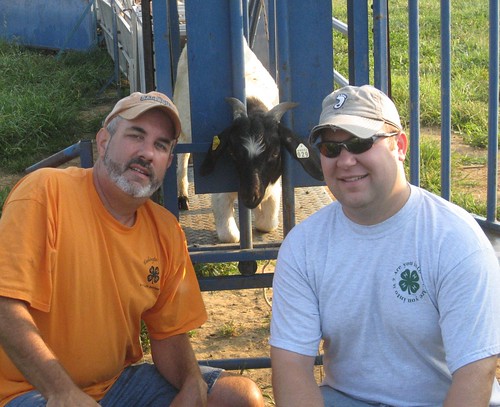 The goats were weighed by Jeff Semler and David Gordon. For the previous 13-day period, weight gain ranged from -2 to +10 lbs. (0.9 to 4.5 kg) and averaged 4.3 lbs. (2 kg) or 0.327 lbs. (147 g) per day.
For the period, the fastest gaining goat was a Kiko buck consigned by Merritt Burke (DE). It gained 10 lbs. or 0.769 lbs. (350 g) per day. One of Craig Adams's (IL) Kiko bucks gained 9 lbs. or 0.692 lbs. (315 g) per day.
For the first 70 days of the test, weight gain has ranged from -5 to +30 lbs. (-2.3 to 13.6 kg) or -0.07 to 0.435 lbs. (-32 to 198 g) per day. The top-gaining goat is a Kiko buck consigned by Merritt Burke. It has gained 30 lbs. or 0.435 lbs. per day while on test.
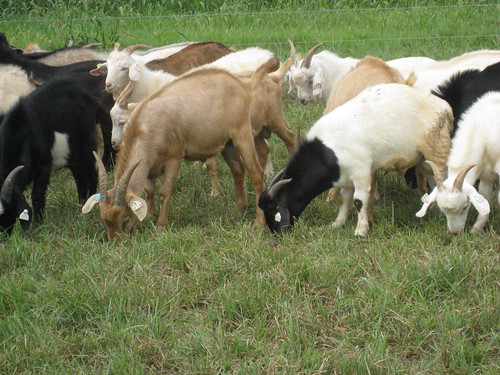 Four out of five of Craig Adams's goats are gaining over 0.30 lbs. (136 g) per day. Merritt Burke has three goats that are gaining more than 0.30 lbs. per day. John Smith (VA) has two goats that are averaging more than 0.30 lbs. per day.
The next best goats are gaining 0.29 lbs. (132 g) per day. There are three of them: two consigned by Dana and Kendall Barnes (KY) and one consigned by Sky and Deborah Shivers (OK). All of the top gaining goats are Kiko or percentage Kiko.
For the August 13 collection, fecal egg counts ranged from 0 to 3,133 eggs per gram and averaged just 493 eggs per gram. Two weeks prior, eggs counts averaged 663 eggs per gram. No goats required anthelmintic treatment today. FAMACHA© scores ranged from 1 to 3 and averaged 1.8, the same as two weeks ago.
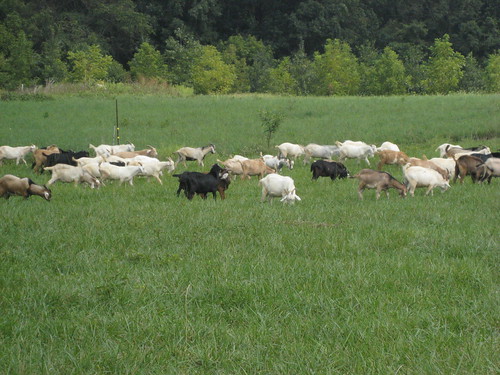 The goats have been and are currently grazing tall fescue. All of the fescue at the test site is MaxQ™. As such, it does not contain the toxic endophyte.
The goats will be worked next on Thursday, September 10th. In addition to the regular data collection, the goats will be scanned to determine their rib fat and rib eye area. Scrotal measurements will be taken. Scrotal splits will be noted and measured. Teats will be counted and evaluated. The goats will also be evaluated for structural correctness (mouths, feet, legs, etc.)
Download August 26 report
FAMACHA© eye anemia, body condition, and coat condition scores were determined by Susan Schoenian. Data was recorded by Pam Thomas. Individual and pooled fecal samples were collected by Susan Schoenian and Mary Beth Bennett and sent via overnite mail to Delaware State University and the University of Georgia, respectively.
The goats were weighed by Jeff Semler and David Gordon. For the previous 13-day period, weight gain ranged from -2 to +10 lbs. (0.9 to 4.5 kg) and averaged 4.3 lbs. (2 kg) or 0.327 lbs. (147 g) per day.For the period, the fastest gaining goat was a Kiko buck consigned by Merritt Burke (DE). It gained 10 lbs. or 0.769 lbs. (350 g) per day. One of Craig Adams's (IL) Kiko bucks gained 9 lbs. or 0.692 lbs. (315 g) per day.
For the first 70 days of the test, weight gain has ranged from -5 to +30 lbs. (-2.3 to 13.6 kg) or -0.07 to 0.435 lbs. (-32 to 198 g) per day. The top-gaining goat is a Kiko buck consigned by Merritt Burke. It has gained 30 lbs. or 0.435 lbs. per day while on test.
Four out of five of Craig Adams's goats are gaining over 0.30 lbs. (136 g) per day. Merritt Burke has three goats that are gaining more than 0.30 lbs. per day. John Smith (VA) has two goats that are averaging more than 0.30 lbs. per day.The next best goats are gaining 0.29 lbs. (132 g) per day. There are three of them: two consigned by Dana and Kendall Barnes (KY) and one consigned by Sky and Deborah Shivers (OK). All of the top gaining goats are Kiko or percentage Kiko.
For the August 13 collection, fecal egg counts ranged from 0 to 3,133 eggs per gram and averaged just 493 eggs per gram. Two weeks prior, eggs counts averaged 663 eggs per gram. No goats required anthelmintic treatment today. FAMACHA© scores ranged from 1 to 3 and averaged 1.8, the same as two weeks ago.
The goats have been and are currently grazing tall fescue. All of the fescue at the test site is MaxQ™. As such, it does not contain the toxic endophyte.The goats will be worked next on Thursday, September 10th. In addition to the regular data collection, the goats will be scanned to determine their rib fat and rib eye area. Scrotal measurements will be taken. Scrotal splits will be noted and measured. Teats will be counted and evaluated. The goats will also be evaluated for structural correctness (mouths, feet, legs, etc.)
Download August 26 report



 Why didn’t I take a sample of the thistles? The goats beat me to them. In the chicory field there is a rock outcropping that was rife with thistles. When the goats were turned into that paddock they ate the thistles first. This I believe had more to do with behavior than with nutrition. The rock outcroppings are the high ground in the paddock, and this was the preferred position for the goats to set up camp. Below you can see the before and after pictures of the rock outcroppings.
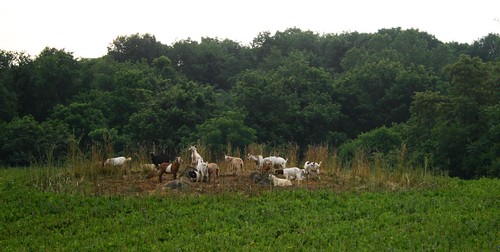 So, is that plant a weed or is it feed? I guess it depends on your point of view.
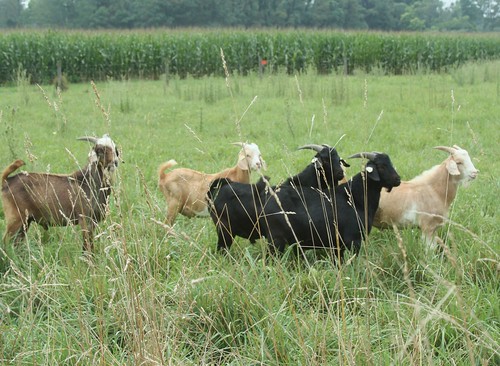
 For the first 56 days of the test, the top gaining goat is a Kiko buck consigned by Craig Adams (Illinois). It has gained 21 lbs. (9.5 kg) or 0.375 lbs. (170 g) per day since June 18. The next three top gaining goats are Kikos consigned by Merritt Burke (Delaware). The bucks from Burke's consignment of five are averaging 0.303 lbs. (138 g) per day.