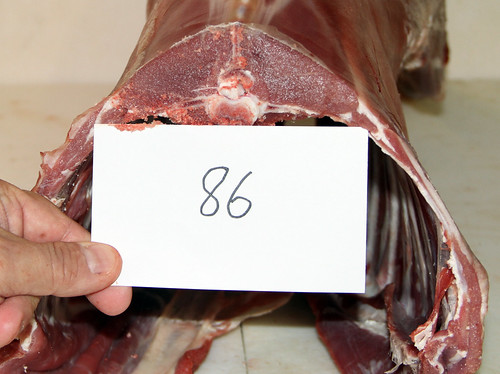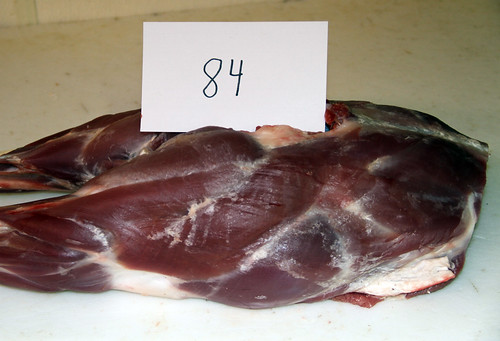
A more detailed article about the carcass comparison study has been posted to the web at http://www.sheepandgoat.com/programs/GoatTest/2011/11carcassevaluation.html. The article includes images of the rib eye of each goat.
In addition to comparing the raw data, the article indicates whether the differences between the two groups of goats were statistically significant. For example, the raw data shows that the pen-fed goats had a higher percentage of lean in their carcasses, but according to statistical analysis, the difference was not significant. In other words, percent lean did not vary between the two groups of goats.
Differences in cold carcass weight, body wall thickness, percent kidney and heart fat, percent fat, and yield were significant, whereas differences in live weight, hot carcass weight, rib eye area, percent bone, and percent lean were not.
While the results of this small study showed that pen-feeding increased the yield of boneless meat, the economics of pen-feeding is affected by many factors and will vary by operation. Next year, we hope to be able to evaluate the economics of pen-feeding, as well as continue to evaluate the carcass characteristics between the two types of meat goats.
Thanks to all the consigners who provided goats for the carcass comparison study.
Read detailed article
 |
| The pen-fed goats had more kidney and heart fat. |
Differences in cold carcass weight, body wall thickness, percent kidney and heart fat, percent fat, and yield were significant, whereas differences in live weight, hot carcass weight, rib eye area, percent bone, and percent lean were not.
While the results of this small study showed that pen-feeding increased the yield of boneless meat, the economics of pen-feeding is affected by many factors and will vary by operation. Next year, we hope to be able to evaluate the economics of pen-feeding, as well as continue to evaluate the carcass characteristics between the two types of meat goats.
Thanks to all the consigners who provided goats for the carcass comparison study.
Read detailed article